Speed-to-Lead in the AI Era: Why 60 Seconds Is the New Standard
Response time is the highest-leverage variable in any appointment- or lead-driven business — and it just became fully automatable. Here's the benchmark, the math, and the operating model that hits it every time.
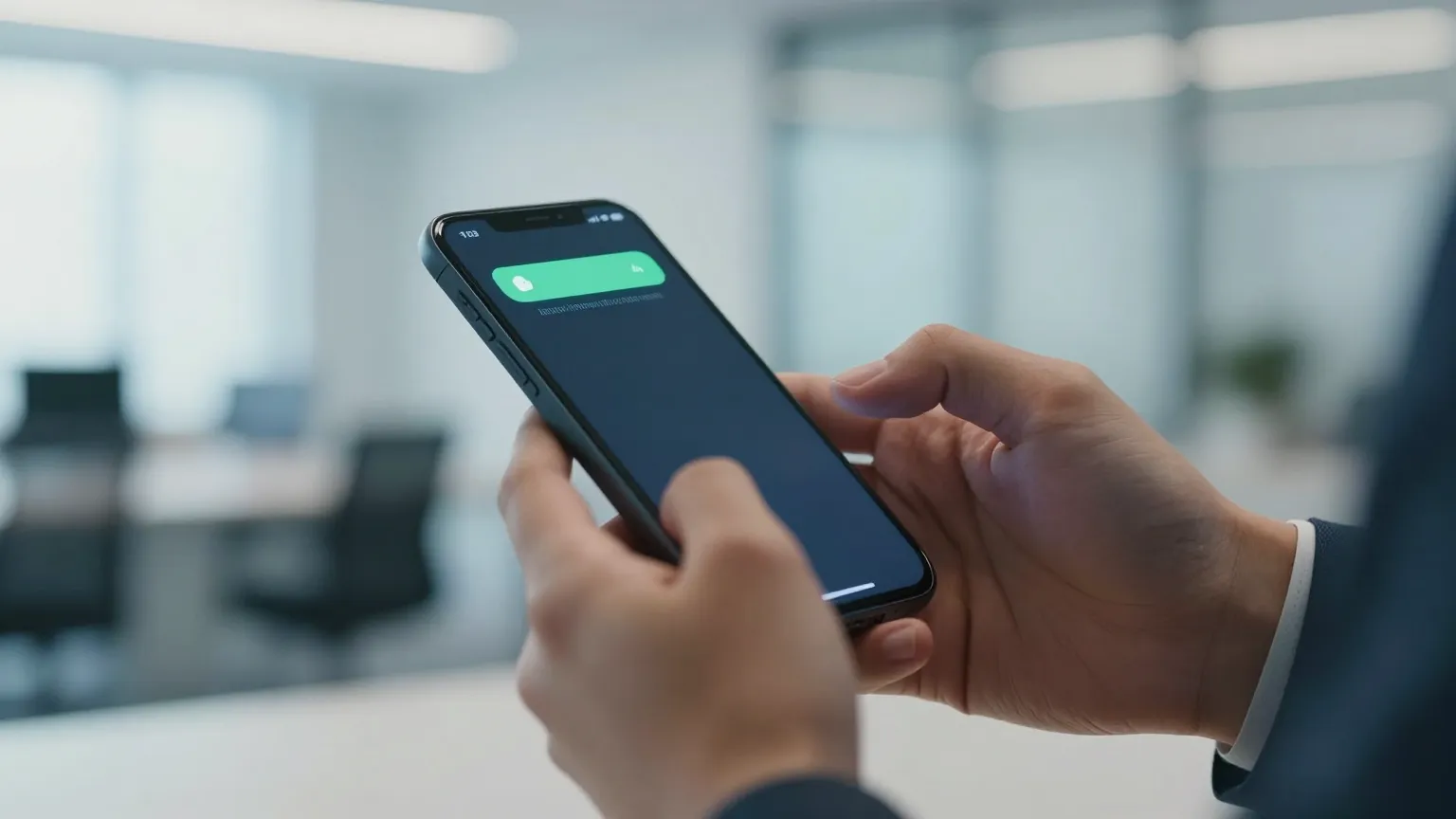
Of all the levers a service business can pull to win more work — better ads, sharper pricing, a slicker website — the one with the highest and most reliable payoff is also the least glamorous: how fast you respond when someone reaches out. For decades that number was a function of who happened to be at the desk. It no longer has to be. Response time is now something you configure, not something you staff, and that changes the standard from “we call back same day” to a first reply inside sixty seconds.
This is a single-argument piece, and here is the argument: for any appointment- or lead-driven business, speed-to-lead is the CX variable that compounds. Fix it and conversion, review scores, and revenue per lead move with it. Below is the decay curve behind the claim, the reasons almost everyone still misses the window, an honest way to model your own losses, and what a sub-60-second response actually requires to run — without turning fast into sloppy.
The decay curve: what happens minute by minute
The foundational research here is old enough to be uncontroversial. The Lead Response Management study led by James Oldroyd found that the odds of making meaningful contact with a lead drop by orders of magnitude between a five-minute and a thirty-minute response, and that calling within the first minutes dwarfs any other timing. Harvard Business Review’s “The Short Life of Online Sales Leads” put numbers on the same effect: firms that contacted a lead within an hour were far more likely to qualify it than those who waited even two hours — and most companies took far longer than an hour.
The mechanism is not mysterious. A person who just filled out a form or dialed your number is, at that exact moment, thinking about their problem and willing to talk. Ten minutes later they are back in a meeting, on the highway, or filling out the next company’s form. Intent is perishable. You are not competing against your own callback queue; you are competing against the decay of the customer’s attention and against every competitor they contacted in the same five minutes.
You are not racing your own callback queue. You are racing the decay of the customer’s intent — and it starts decaying the second they hit send.
Why most businesses still miss the window
If the research is this clear, why is fast response still rare? Because the five-minute standard is nearly impossible to hit with humans alone. A widely cited study of 466 home-services companies found that 95% did not respond within five minutes, and roughly 40% never responded at all to a submitted lead. Those are not lazy businesses. They are businesses whose staff were on a call, on a job, at lunch, or asleep when the lead came in.
The cost of that gap is not abstract. Buyers reward whoever answers first: commonly cited sales research puts the share of customers who go with the first business to respond at around 78%. And in phone-heavy trades, the caller who does not reach a person mostly does not try again — home services research puts the share of missed callers who never call back at roughly 85%. Pair that with Invoca’s data (vendor-published) showing about a quarter of inbound home-services calls go unanswered, and the picture is stark: the lead was interested, reached out, got silence, and bought from someone else.
The three failure modes: after-hours, overflow, and the lunch hour
Slow response is not one problem. It is three, and they need different fixes. Naming them is what lets you close the gaps deliberately instead of hiring blindly against all of them.
- After-hours. The call or text arrives at 9 p.m., on a weekend, or on a holiday. For emergency trades this is often the highest-intent volume you get, and it lands when the office is empty.
- Overflow. Two lines ring at once, or a surge hits, and the second caller rolls to voicemail while your one available person finishes the first conversation. This is the silent killer during peak season, when demand and misses spike together.
- The lunch hour (and every other coverage gap). The desk is technically open, but the one person who answers stepped away. A predictable daily window becomes a predictable daily leak.
Traditional answers — an answering service, a callback rotation, one more front-desk hire — each patch one mode and miss the others, and they all add fixed cost. An always-on agent that answers in seconds addresses all three at once, which is why the economics finally work.
Modeling your own loss: a formula and a worked example
Do not take the benchmarks on faith — run your own number. The loss from slow response is invisible on a P&L precisely because a missed lead never becomes a line item. Make it visible with a simple model:
The formula
Worked example, deliberately conservative. Say you miss 8 genuine inbound opportunities a week — after-hours calls, overflow, form fills nobody replied to. Assume you would have booked a third of them (33%) had you responded in under a minute, and your average booked job is worth $600. That is 8 × 52 × 0.33 × $600 ≈ $82,000 a year walking to a competitor. Raise the ticket to a $1,200 HVAC repair and the same miss rate is roughly $165,000. These are ranges, not promises — swap in your own figures — but even the pessimistic version is almost always larger than the cost of never missing again.
| Missed opportunities / week | Avg booked value | Assumed win rate | Annual revenue at risk |
|---|---|---|---|
| 5 | $400 | 33% | ~$34,000 |
| 8 | $600 | 33% | ~$82,000 |
| 8 | $1,200 | 33% | ~$165,000 |
| 12 | $600 | 40% | ~$150,000 |
What a sub-60-second response actually requires
Answering in under a minute, every time, is not a matter of trying harder. It requires a system with four properties, none of which a human rota reliably provides:
- Always on.The same response at 3 a.m. Sunday as at 10 a.m. Tuesday. No queue, no voicemail, no “our office hours are.”
- Concurrent. Ten simultaneous conversations get the same instant answer as one. Overflow stops existing as a failure mode.
- Two-way on the customer’s channel. A missed call answered by an immediate text-back, and an inbound text answered in the thread — because for many customers a fast text beats a slow call.
- Able to finish the job.Speed only counts if the first response moves toward an outcome — qualifying the need and booking into a real calendar, not just saying “someone will get back to you.”
Speed without sloppiness: qualification at machine speed
The obvious objection is that fast means shallow — that a sixty-second reply just books junk faster. The opposite is true when the response is agentic rather than a canned auto-reply. A good agent uses those seconds to qualify: what is the problem, how urgent is it, is this in your service area, is it the kind of work you take. It can gather more structured detail than a rushed human juggling three lines, and do it the same way every time.
That consistency is the underrated benefit. Your best CSR on their best day is excellent; your coverage at 2 a.m. during a heat wave is whoever picked up. An agent collapses that variance. Every caller gets the same thorough intake, and the genuine emergency or high-value job gets routed to a human immediately, with the full context attached — which is a subject worth its own treatment in our guide to handoff design.
The takeaway
Measuring it: median time-to-first-response by channel and hour
You cannot manage what you average away. The single most useful metric is median time-to-first-response, broken out by channel (call vs. text) and by hour of day. Averages hide the problem because a handful of instant daytime answers mask a wall of after-hours silence. The median, sliced by hour, shows you exactly where the leak is.
Track it alongside the outcome it drives — book rate — and you will see the relationship directly: the hours with the slowest response are almost always the hours with the worst booking. Close the response gap and the book rate follows. Then translate the whole thing into the only number finance cares about, which we cover in the cost-per-outcome framework: not calls answered, but booked outcomes per dollar.
Sources
- Harvard Business Review — “The Short Life of Online Sales Leads” (2011).
- Lead Response Management study (James Oldroyd) — five-minute contact-rate research.
- Study of 466 home-services companies — lead-response benchmarks (95% miss the 5-minute window; ~40% never respond).
- Sales research on first-responder advantage (~78% buy from the first business to respond).
- Invoca — home-services unanswered-call and missed-caller data (2024). Vendor-published.
Keep reading
 Agentic AI
The Agentic CX Playbook: What Changes When AI Answers First
Customer experience used to be a function you staffed. In the agentic era it's a system you design — one where AI handles first contact end-to-end and a human is the escalation path, not the default.
 CX Metrics & ROI
Measuring CX ROI: The Cost-Per-Outcome Framework
Deflection rate, CSAT, and tickets-per-agent are operational metrics dressed up as business metrics. The only number a CFO can act on is cost per booked outcome — and almost nobody reports it.
 Industry Playbooks
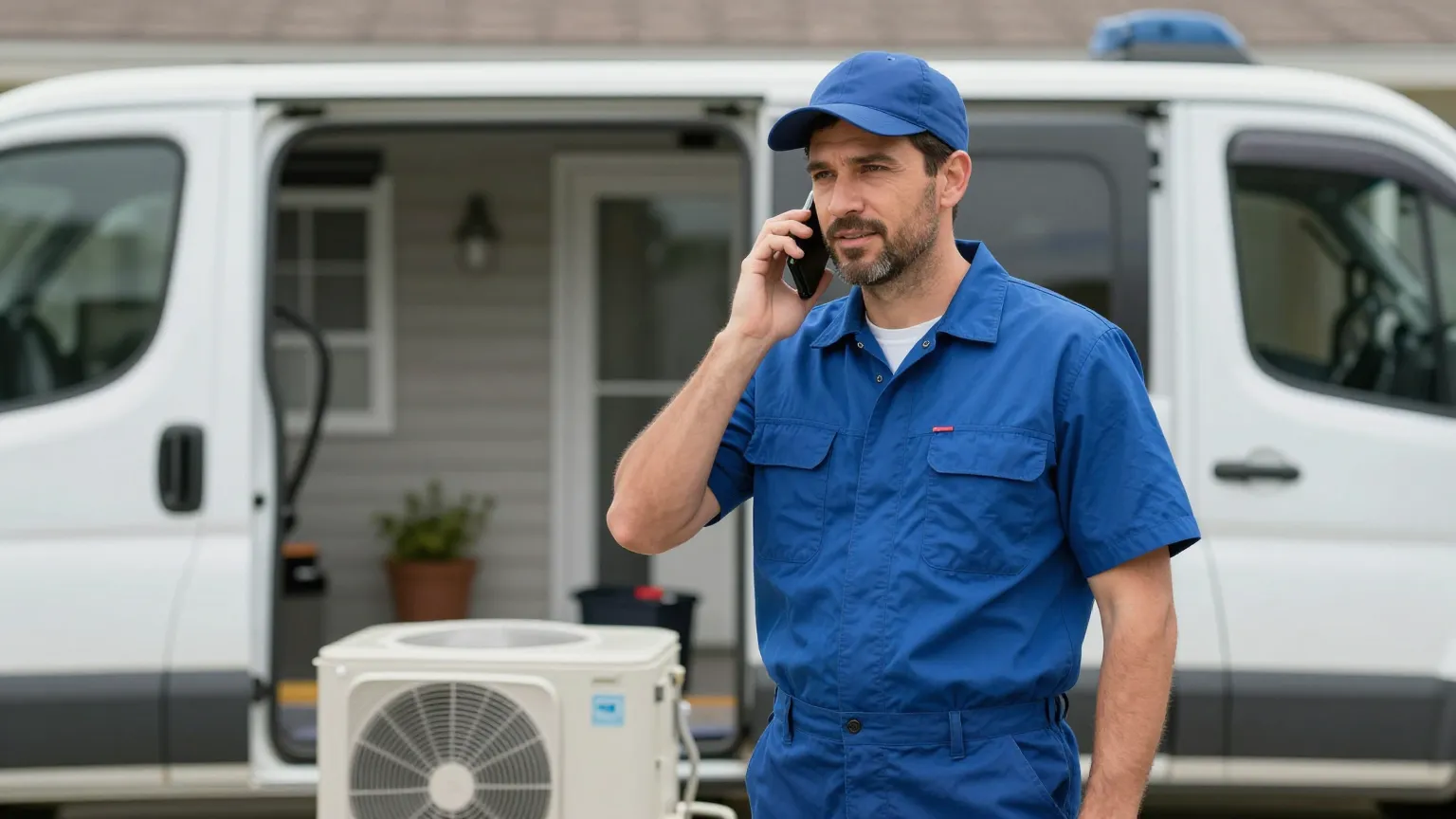
The HVAC Contractor's Guide to AI-Powered Customer Experience
HVAC demand is violently seasonal, emotionally urgent, and phone-dominated — the exact profile where an AI front line produces the biggest measurable revenue swing. Here's the operating playbook from first ring to maintenance-plan renewal.